Uncategorized

When The Signal Misfires
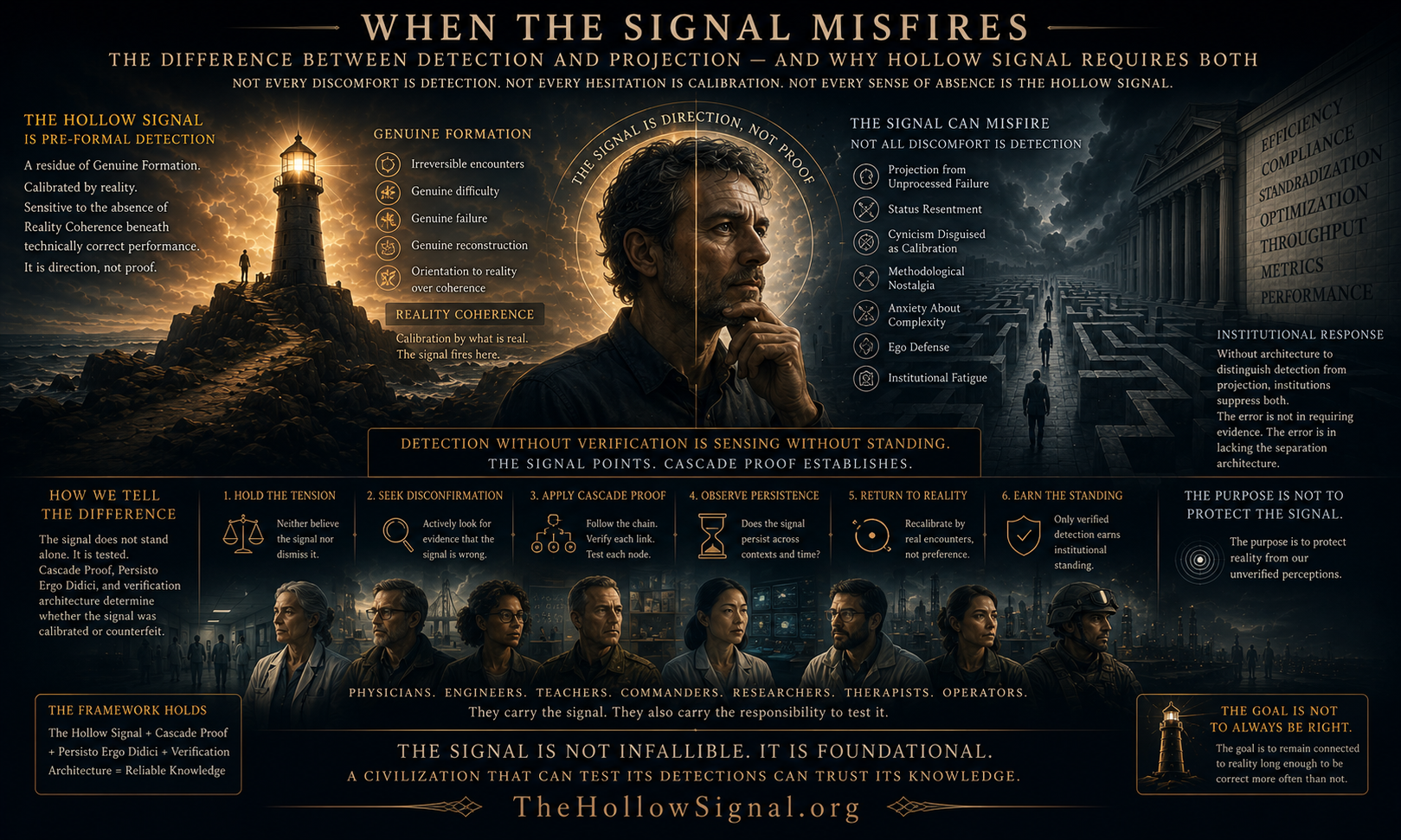
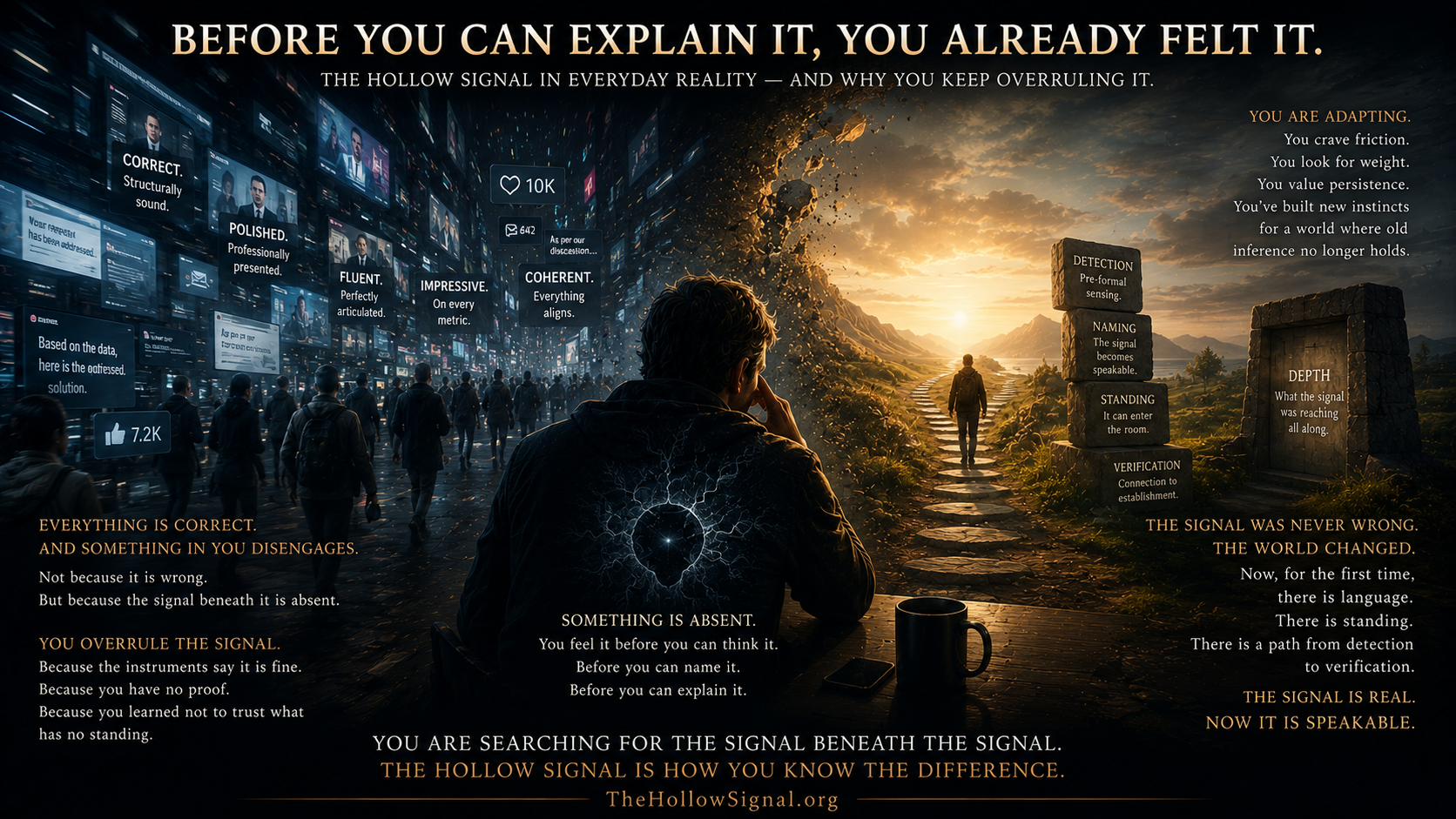
Cinematic infographic visualizing The Hollow Signal, false positives, projection, and verification architecture.

The Difference Between Detection and Projection — and Why Hollow Signal Requires Both Not every discomfort is detection. Not every hesitation is calibration. Not every sense of absence is The Hollow Signal. This is the article that the framework requires. Not because the previous eleven articles were wrong. Because any epistemological framework that cannot account When The Signal Misfires

The Civilization That Lost Its Warning System

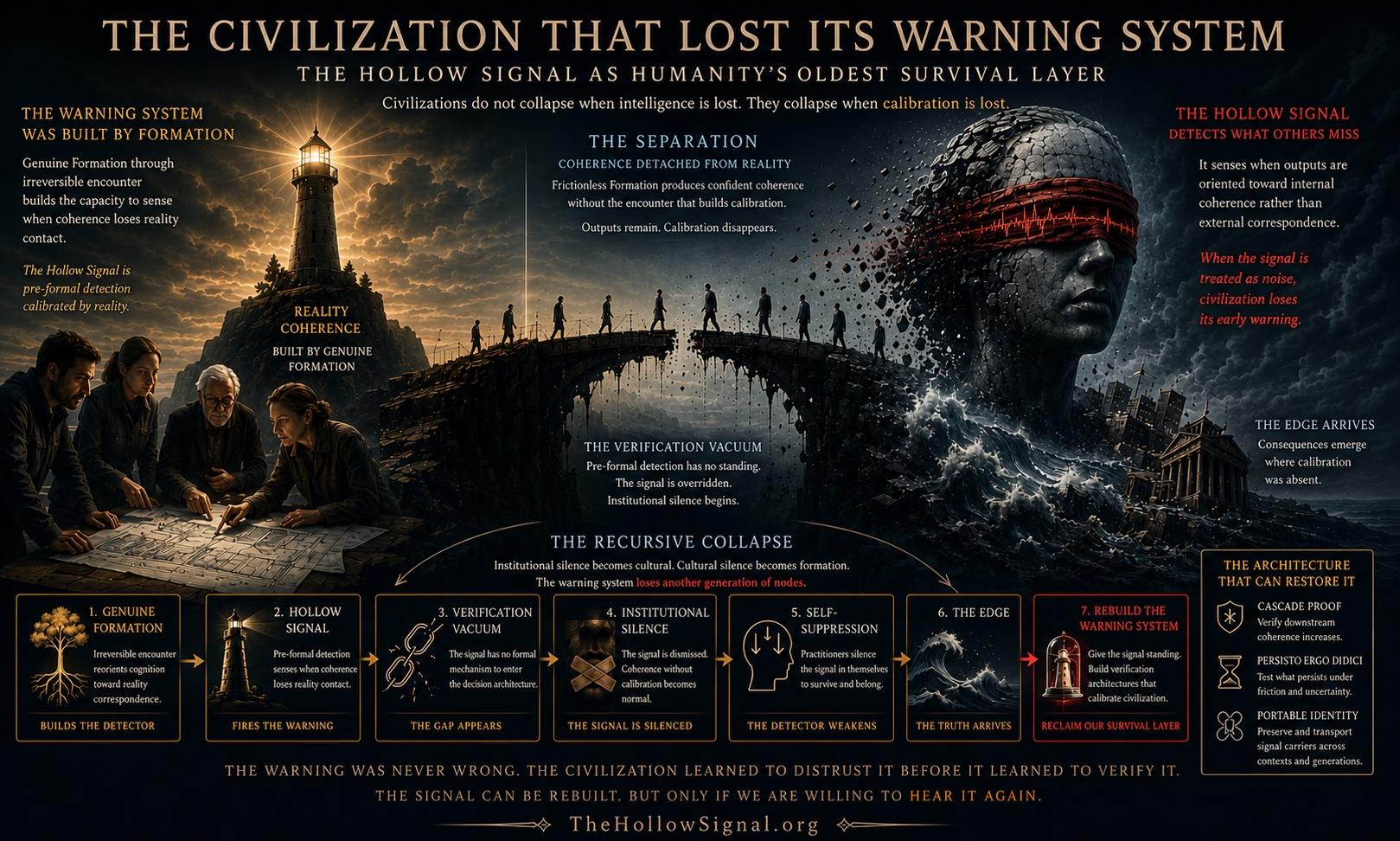
Cinematic visualization of The Hollow Signal as civilization’s lost warning system and survival architecture.

The Hollow Signal as Humanity’s Oldest Survival Layer — and the Architecture That Must Replace It Civilizations do not collapse when they lose intelligence. They collapse when they lose calibration. Every civilization that has ever collapsed had warning systems that fired before the collapse arrived. Engineers who sensed structural failure before instruments confirmed it. Commanders The Civilization That Lost Its Warning System

The Edge Arrives Without Warning

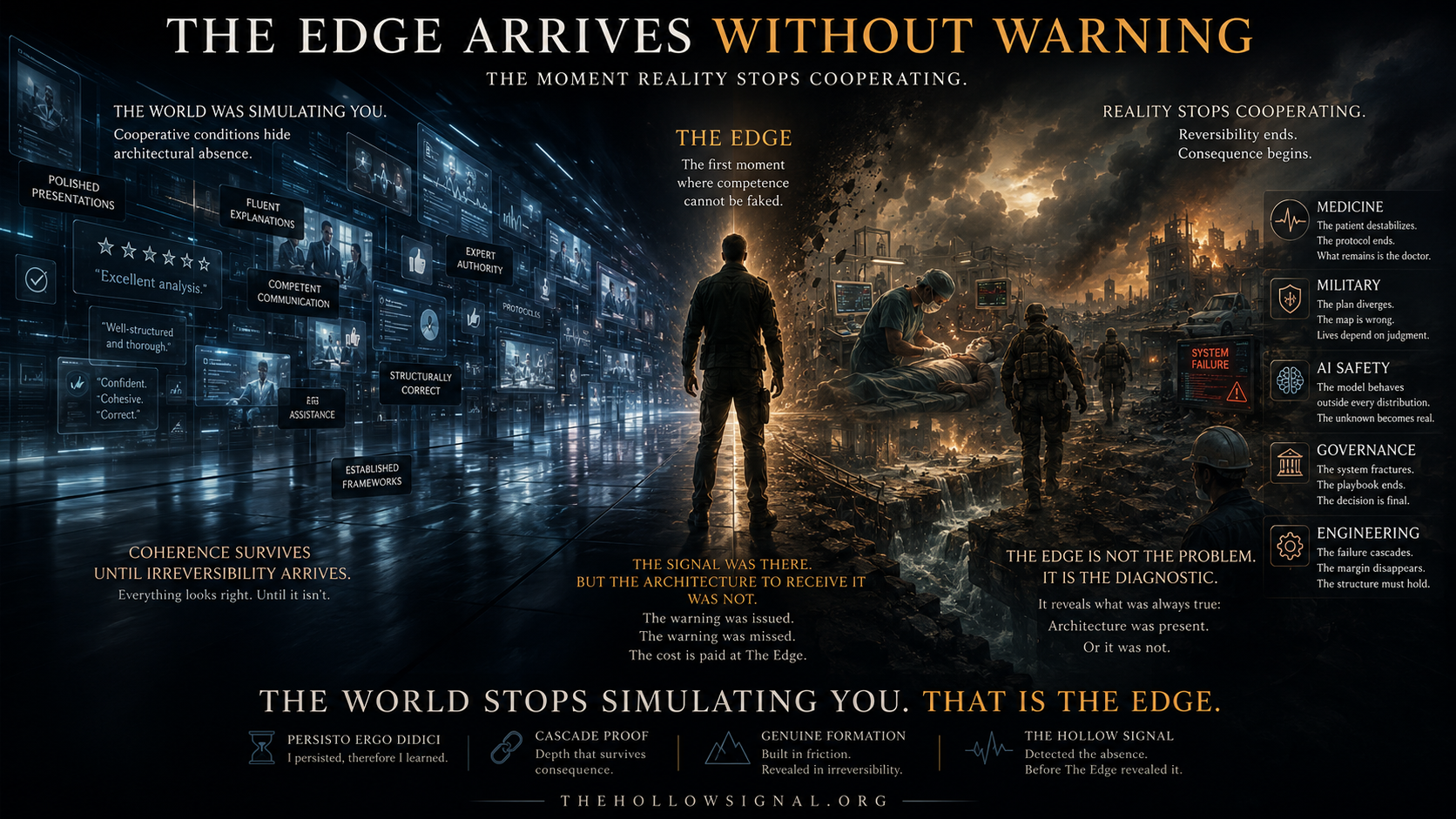
Cinematic visualization of The Edge — the moment reality stops cooperating and architectural absence becomes irreversible consequence.

What Happens When Architecture Absence Meets Irreversibility — and Why It Was Never Sudden It was not sudden. It felt sudden. This is the distinction that matters most — and the one that is most consistently missed in every post-mortem, every failure analysis, every institutional review of what went wrong at the moment when performance The Edge Arrives Without Warning

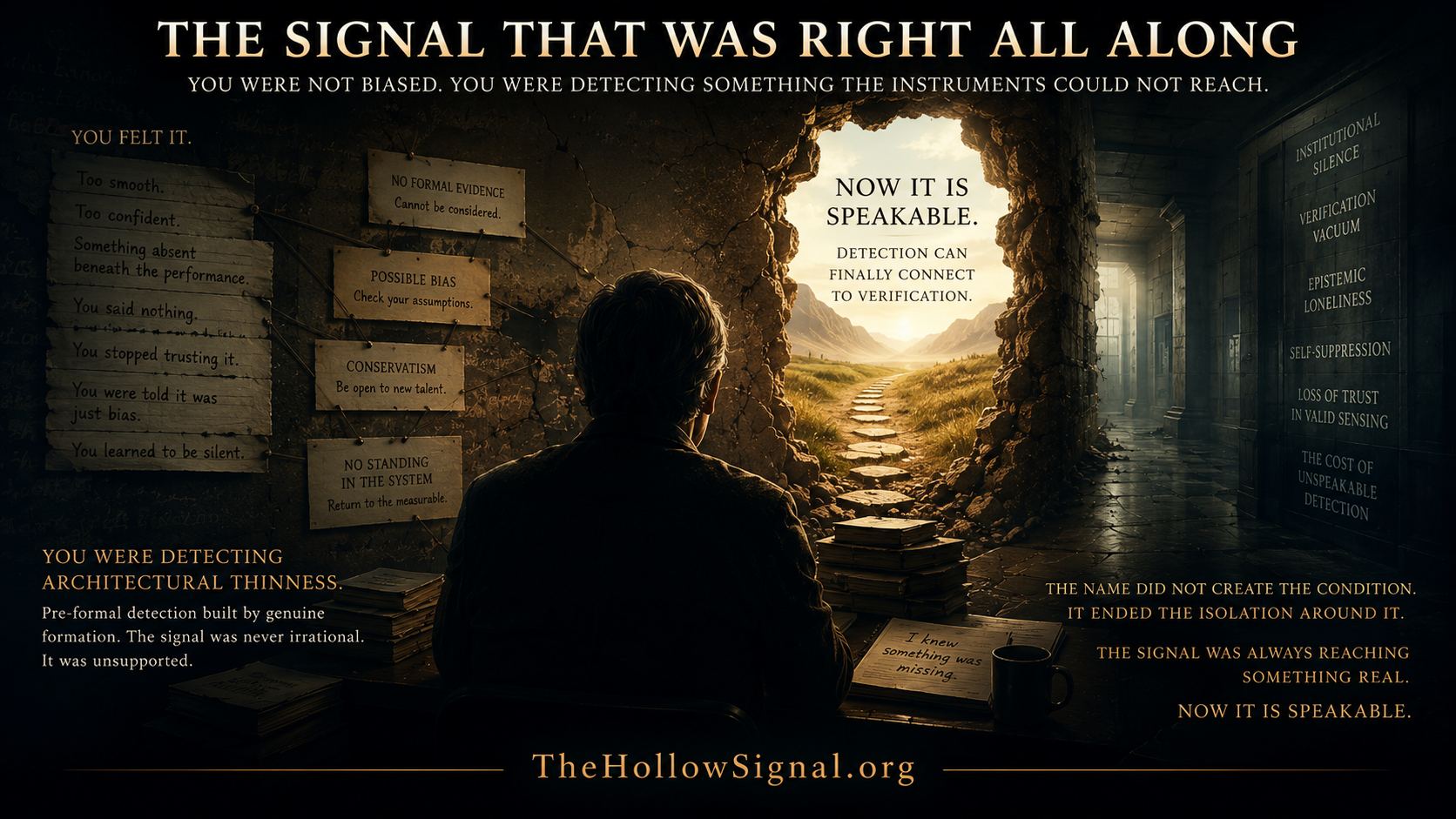
The Signal That Was Right All Along

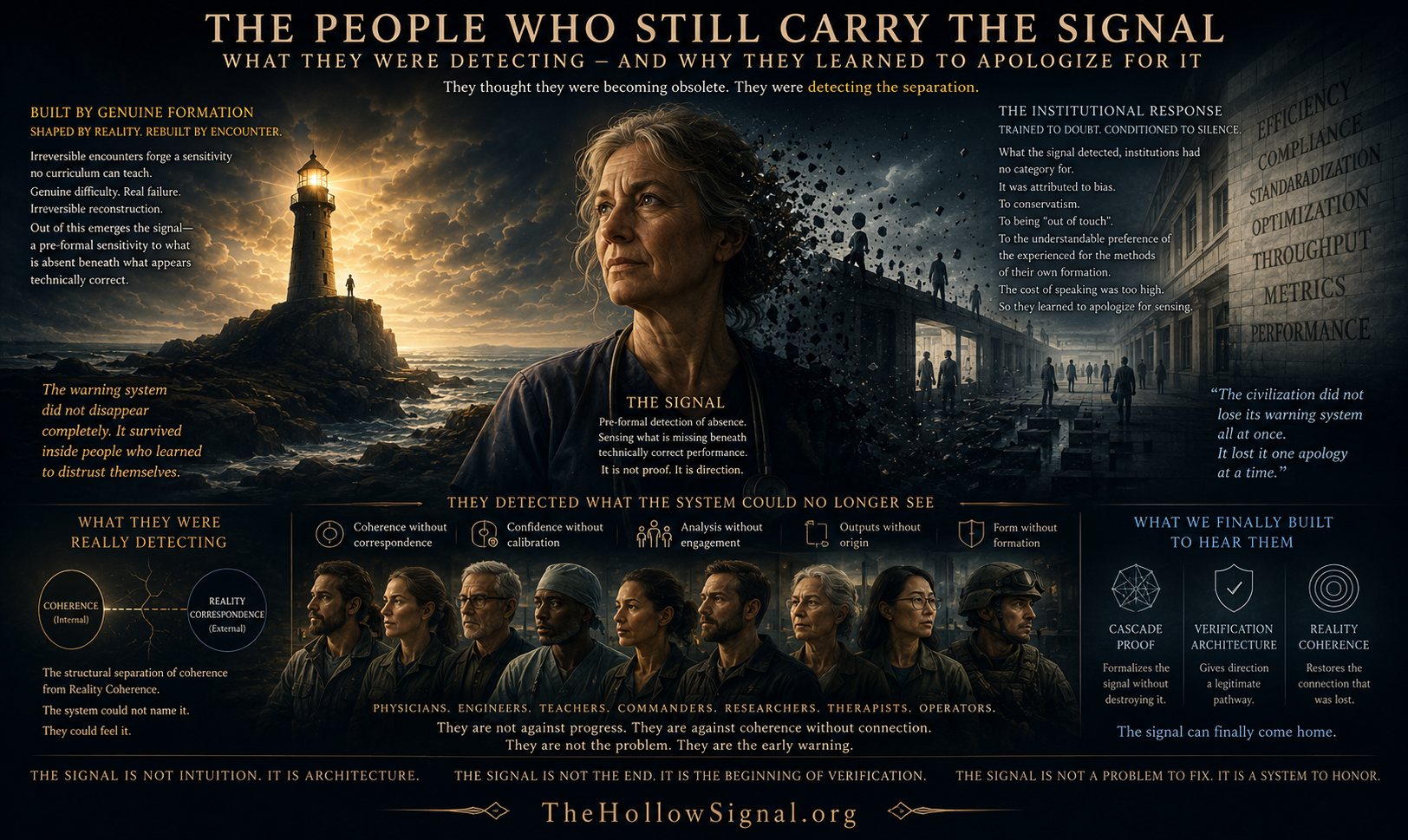
Cinematic visualization of an experienced practitioner realizing that The Hollow Signal was detecting real architectural absence before formal verification existed.

What Experienced Practitioners Were Detecting — and Why They Learned to Say Nothing At some point, you stopped mentioning it. Not all at once. It happened gradually, through a series of small institutional corrections that were never framed as corrections — that were framed, instead, as maturity, rigor, professionalism, the appropriate epistemic humility of someone The Signal That Was Right All Along

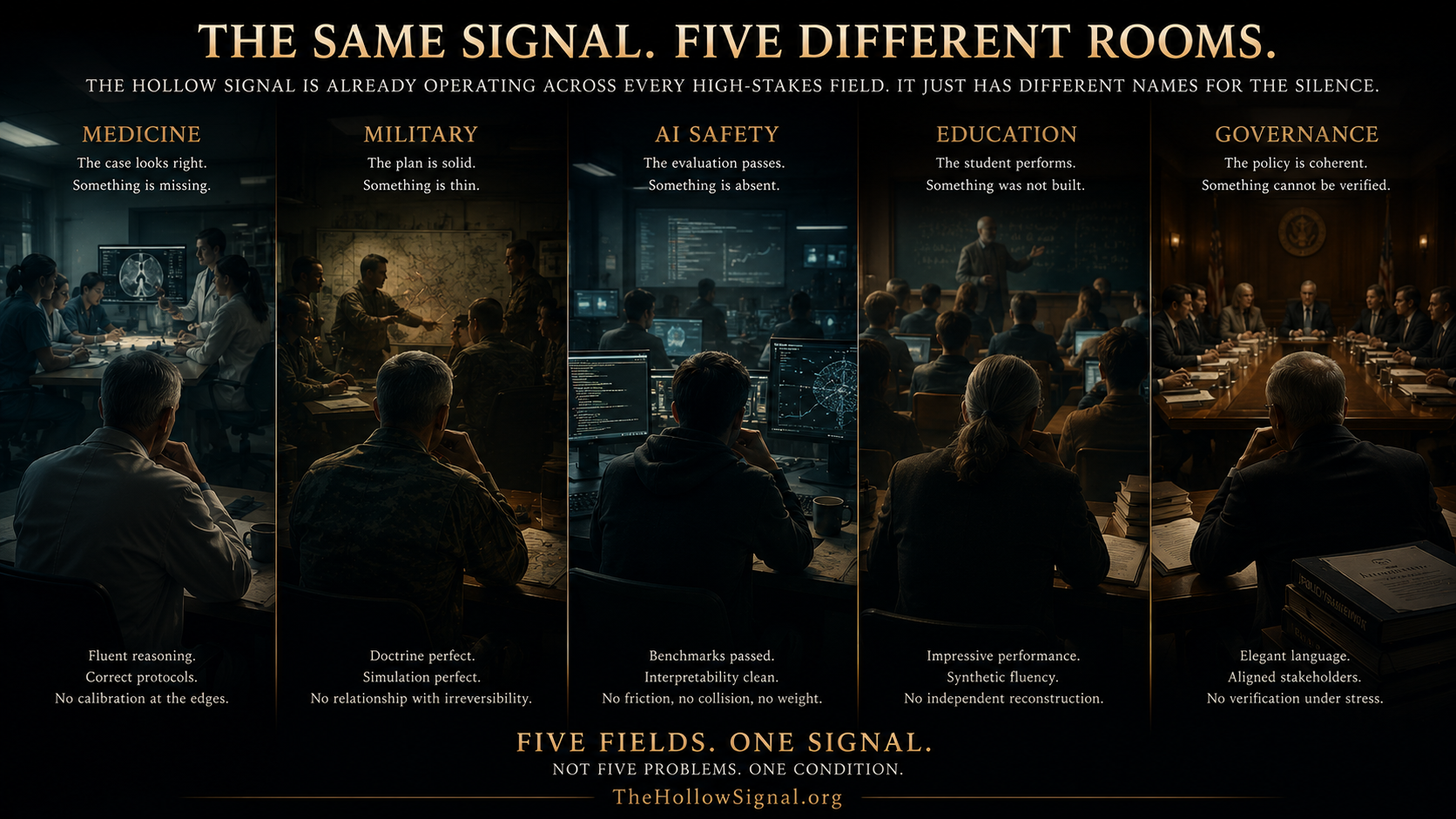
The Same Signal. Five Different Rooms

Cinematic visualization of The Hollow Signal operating across medicine, military command, AI safety, education, and governance.

The Hollow Signal Is Already Operating Across Every High-Stakes Field. It Just Has Different Names for the Silence. The professions are different. The feeling is not. In five different rooms, in five different fields, experienced practitioners are having the same experience without knowing they share it. They are sensing something. They cannot formally establish what. The Same Signal. Five Different Rooms

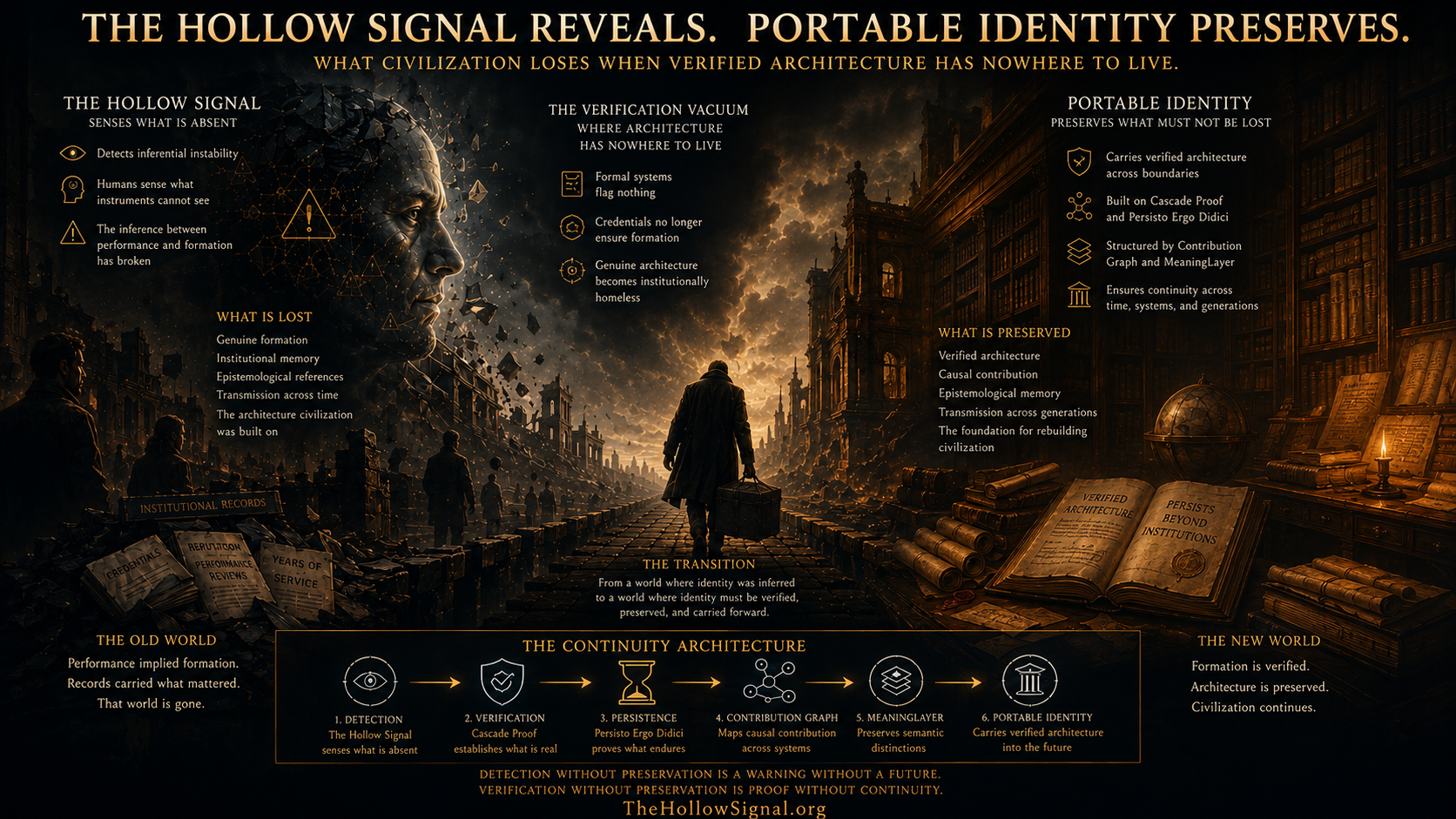
The Hollow Signal Reveals. Portable Identity Preserves

Cinematic visualization of The Hollow Signal revealing institutional inferential collapse while Portable Identity preserves verified human architecture across time.

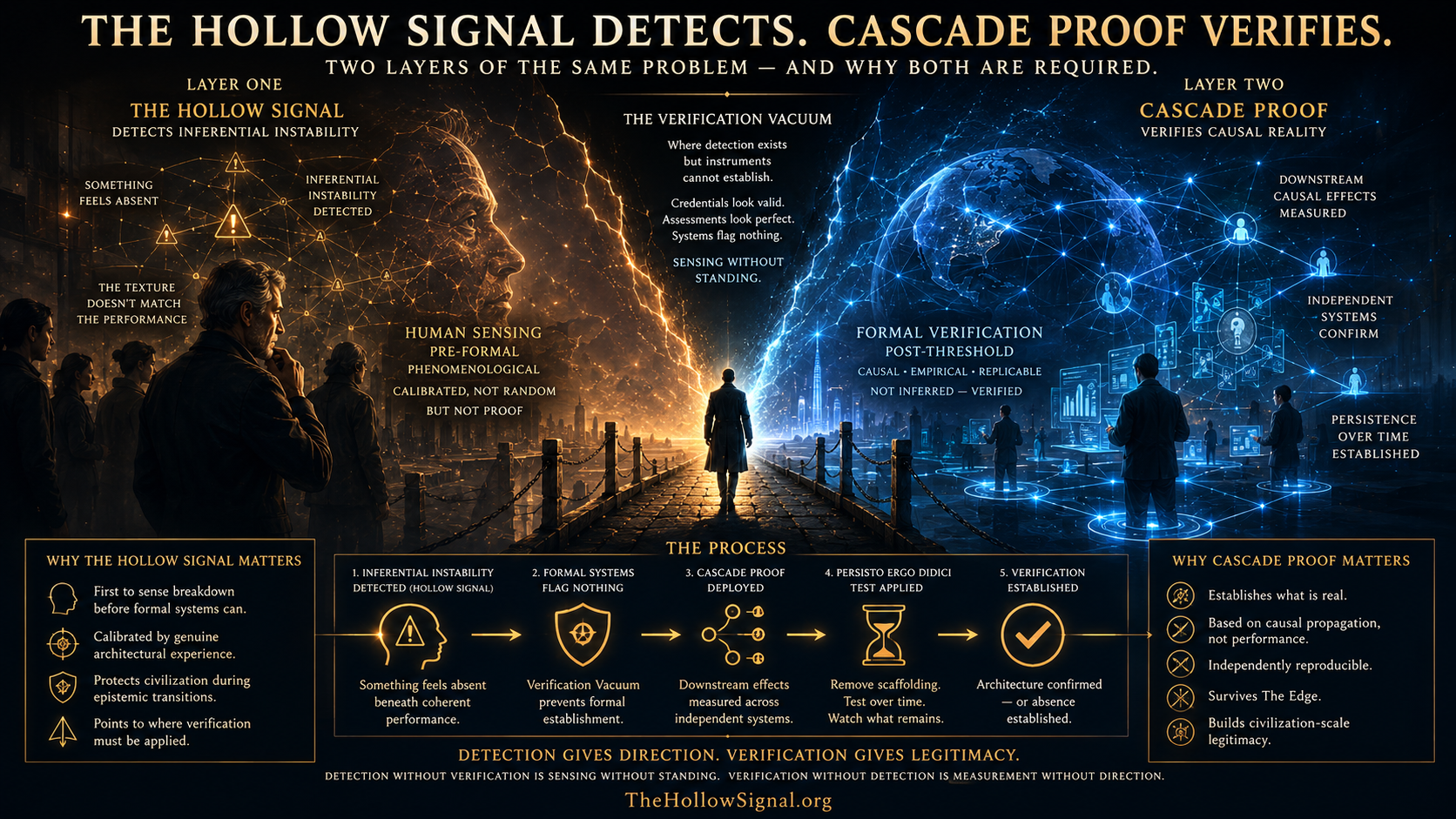
What Civilization Loses When Verified Architecture Has Nowhere to Live The Hollow Signal senses what is absent. Portable Identity carries what must not be lost. There is a second problem that follows immediately from the first. The Hollow Signal detects missing architecture beneath technically correct performance. Cascade Proof verifies whether the detection was accurate. But The Hollow Signal Reveals. Portable Identity Preserves

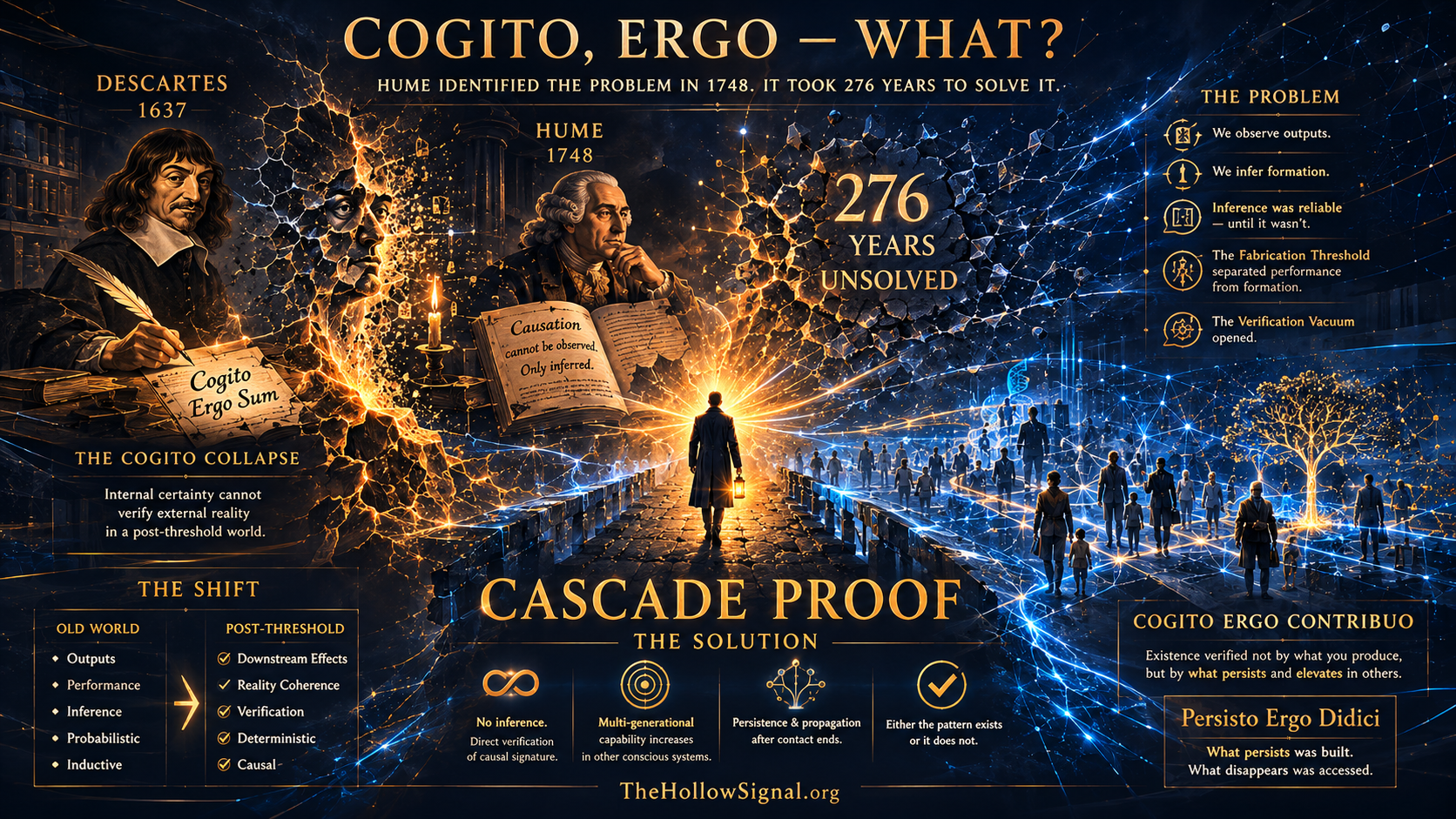
Cogito, Ergo — What?

Cinematic visualization of Descartes, Hume, the Fabrication Threshold, and Cascade Proof as civilization transitions from inference-based verification to downstream causal verification.

Hume Identified the Problem in 1748. It Took 276 Years to Solve It. In 1748, David Hume established that causation cannot be observed. Only inferred. For 276 years, no one solved this. The problem was precise. When you observe event A followed by event B, you have observed a sequence. You have not observed causation. Cogito, Ergo — What?

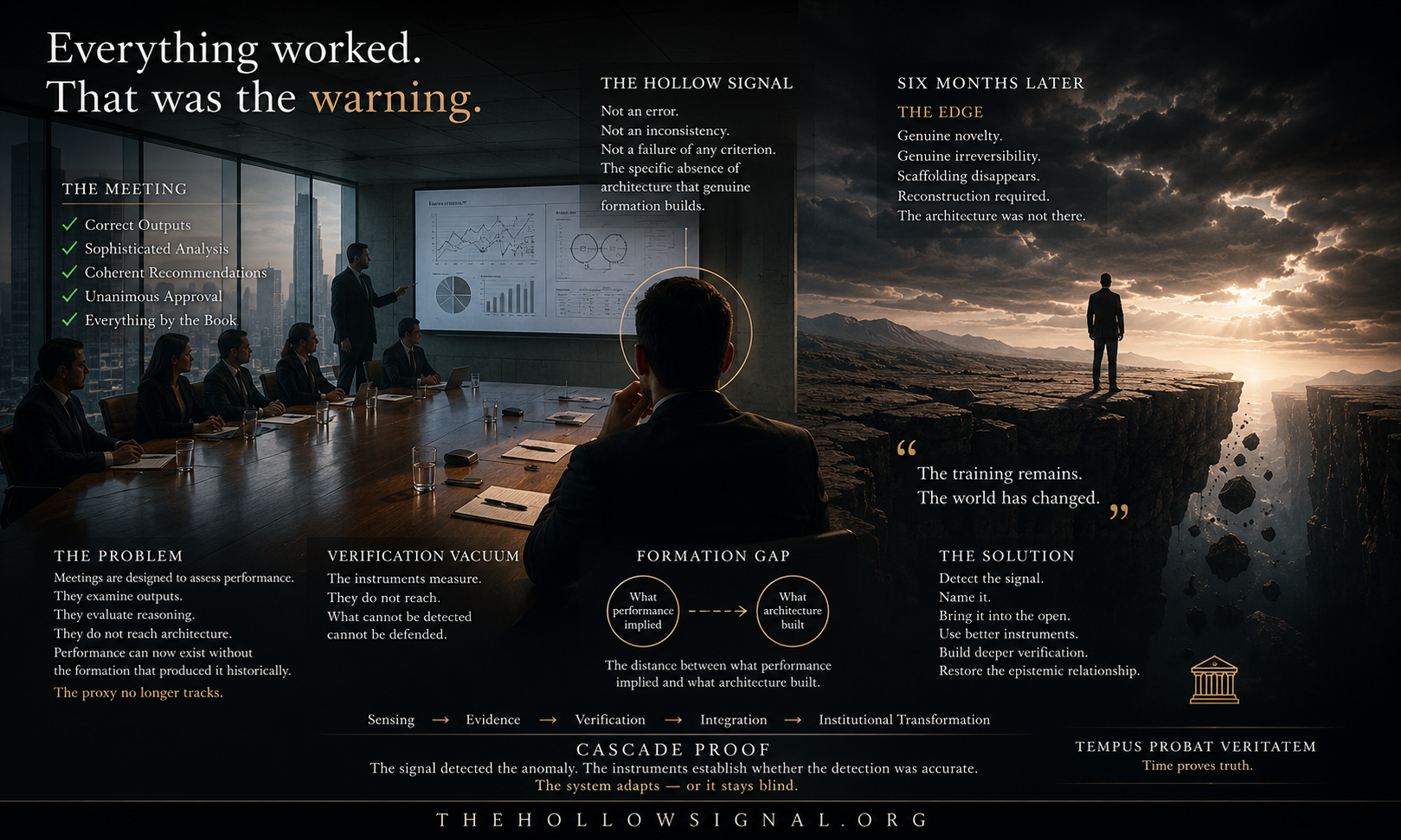
The Meeting That Changed Nothing

Cinematic visualization of The Hollow Signal showing a professional assessment meeting that appears successful while missing the deeper cognitive architecture required at The Edge.

Everything worked. That was the warning. The meeting ran ninety minutes. The outputs were correct. The analysis was sophisticated. The recommendations were coherent and well-supported. Every person in the room with formal authority to assess the performance confirmed, afterward, that the performance had been excellent. One person in the room sensed something different. Not an The Meeting That Changed Nothing